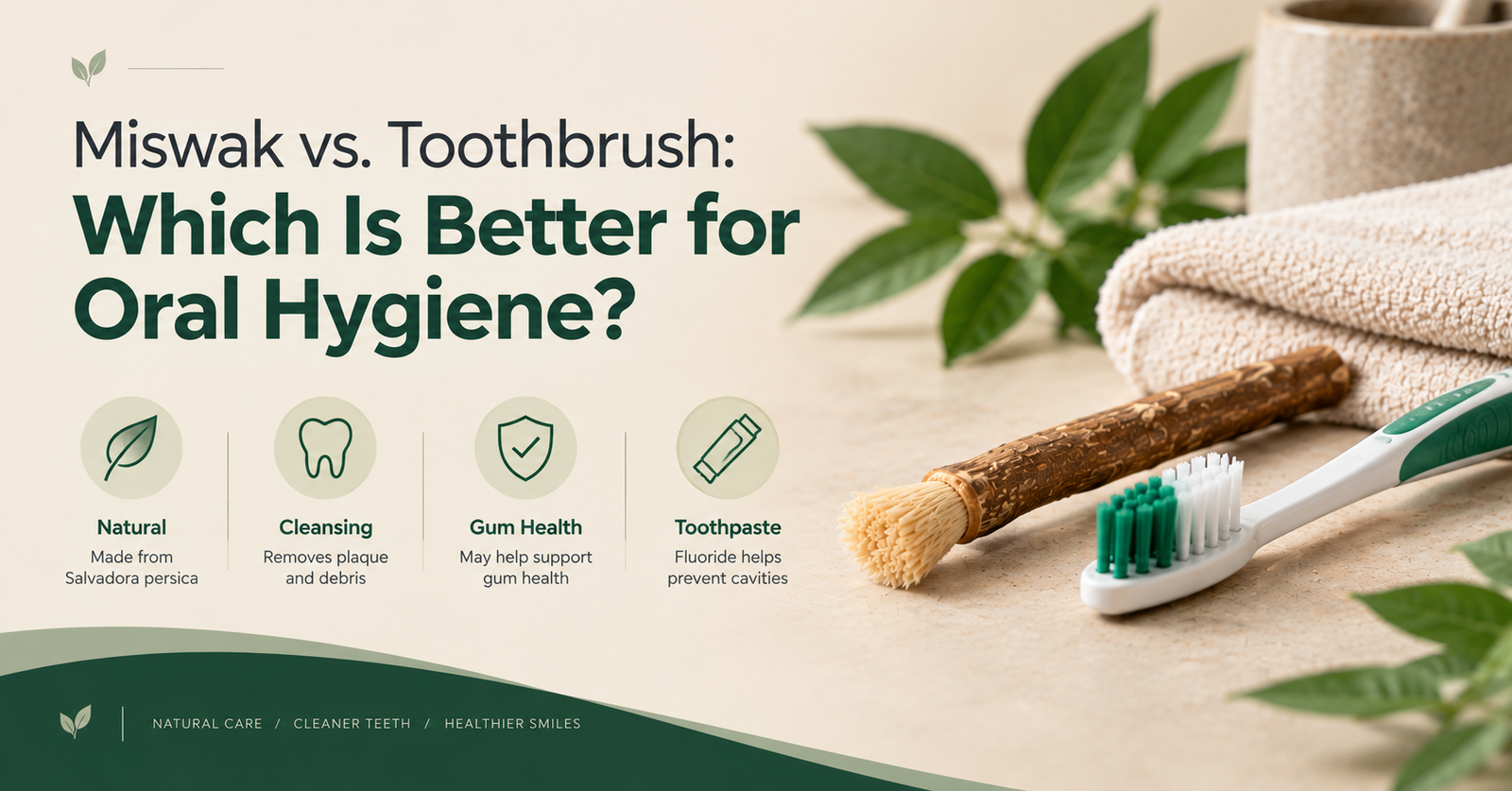
Miswak and toothbrushes are both used to clean teeth, but which one is better for oral hygiene?
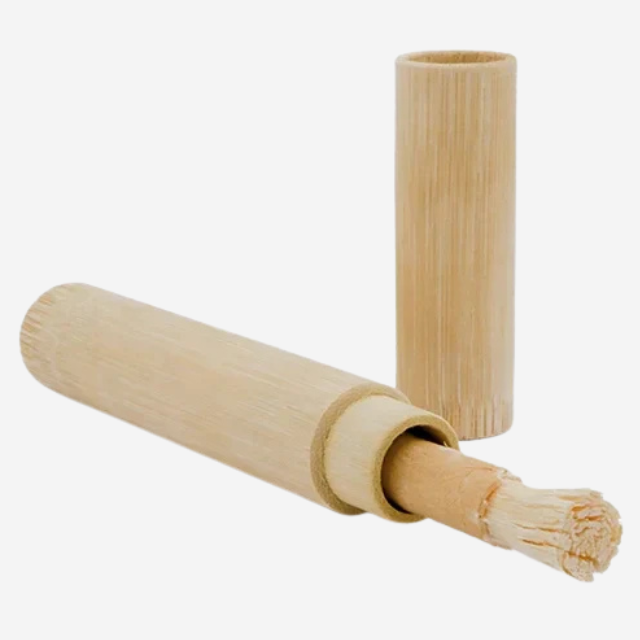
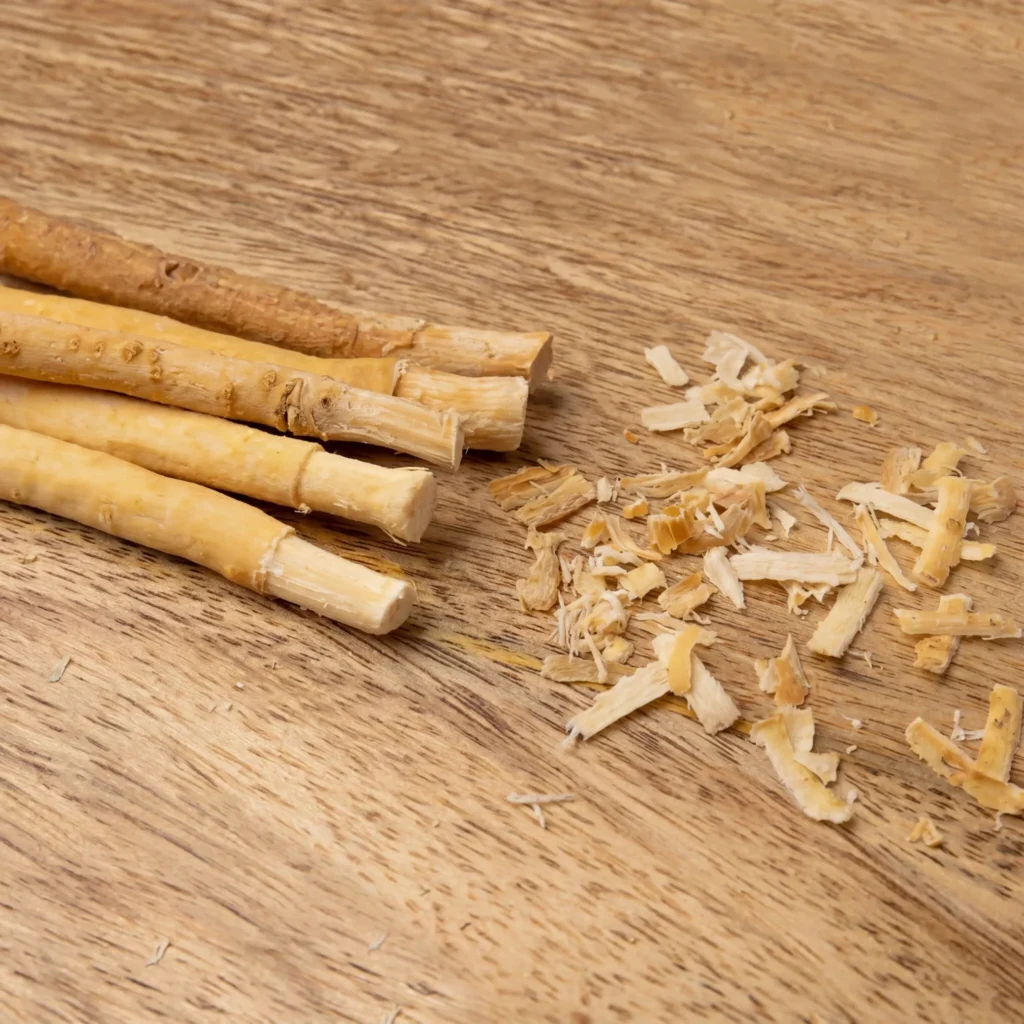
Miswak is a traditional teeth-cleaning stick made from the Salvadora persica tree. It has been used for generations and remains popular because it is natural, portable, and easy to use. A conventional toothbrush, when used with fluoride toothpaste, is a widely recommended way to clean teeth and help prevent cavities.
Research suggests that Miswak can help remove dental plaque and support gum health. However, the results depend on how it is used, and current evidence does not prove that Miswak is always better than a toothbrush.
Miswak vs. Toothbrush: Key Differences
| Feature | Miswak | Conventional toothbrush |
| Type | Natural teeth-cleaning stick | Manual or electric brush |
| How it cleans | Fibres at the end help clean tooth surfaces | Bristles clean tooth surfaces |
| Toothpaste | Commonly used without toothpaste | Usually used with fluoride toothpaste |
| Portability | Lightweight and easy to carry | Easy to carry, but usually used with toothpaste |
| Gum care | May help reduce plaque when used gently and correctly | Effective when used with proper technique |
| Cavity prevention | Evidence is still limited on its own | Fluoride toothpaste has well-established cavity-prevention benefits |
Both methods can contribute to oral hygiene. The key difference is that a conventional toothbrush is commonly paired with fluoride toothpaste, which helps protect teeth against decay.
What Does Scientific Research Say About Miswak?
Research has examined whether Miswak can reduce dental plaque and gingivitis, which is inflammation of the gums.
A 2022 systematic review and meta-analysis assessed clinical trials involving Miswak and conventional toothbrushing. The researchers found that Miswak produced broadly comparable results for plaque and gingivitis in the included studies. They also found potential additional benefits when Miswak was used alongside a conventional toothbrush. However, the studies varied in their methods and did not consistently report how often or how correctly participants used Miswak.
A 2024 randomised controlled trial compared Miswak with conventional toothbrushing over two weeks. The toothbrush group showed a significant reduction in plaque scores, while the Miswak group did not show a statistically significant change. The Miswak group also experienced an increase in gingival scores. The researchers suggested that aggressive use may have contributed to this result.
This was a short study, so it does not settle the question for every Miswak user. It does highlight why technique matters.
Read the 2024 clinical trial comparing Miswak and toothbrushing.
The overall takeaway: Miswak can be a useful oral-cleaning tool, but results vary. The evidence does not establish that it is universally superior to a conventional toothbrush.
Benefits and Limitations of Miswak
Potential benefits
- Helps remove plaque: Miswak fibres can mechanically clean tooth surfaces when used correctly.
- Convenient for daily use: It is compact, lightweight, and does not require a toothbrush handle or toothpaste to use.
- Contains naturally occurring compounds: Salvadora persica contains various compounds studied for their potential effects on oral health. However, laboratory findings do not automatically prove better clinical results.
- Can support an oral-care routine: Some research suggests that using Miswak alongside toothbrushing may offer additional benefits for plaque and gum health.
Limitations to consider
Miswak is not automatically safe or effective simply because it is natural. Using excessive force, applying the wrong angle, or repeatedly rubbing the gums can cause irritation and may contribute to gum damage.
It can also be difficult for some users to clean every tooth surface consistently, particularly around the back teeth and along the gumline.
For these reasons, proper technique and regular dental care remain important.
Can Miswak Replace a Toothbrush and Fluoride Toothpaste?
Miswak can help clean teeth, but it should not be assumed to provide the same cavity protection as fluoride toothpaste.
Fluoride helps strengthen tooth enamel and prevent dental decay. The American Dental Association’s home oral-care guidance recommends brushing twice daily for two minutes with fluoride toothpaste.
The evidence supporting Miswak for plaque control is promising, but research has not established that using a traditional Miswak stick without fluoride toothpaste offers equivalent long-term protection against cavities.
If your main goal is to prevent tooth decay, fluoride toothpaste remains an important part of your routine.
Can You Use Miswak and a Toothbrush Together?
Yes. Using both can be a practical option for people who enjoy Miswak and also want to maintain a conventional oral-care routine.
You can use Miswak gently during the day and brush your teeth with a soft-bristled toothbrush and fluoride toothpaste in the morning and before bed. Make sure you clean all tooth surfaces and avoid scrubbing your gums aggressively.
You should also clean between your teeth daily using dental floss or another suitable interdental cleaner. Miswak and toothbrushing do not necessarily remove plaque from every space between the teeth.
For further guidance, see the American Dental Association’s recommendations for home oral care.
Frequently Asked Questions
- Is Miswak better than a toothbrush or toothpaste?
Not in every situation. Studies suggest that Miswak can reduce plaque and may provide gum-health benefits, but results vary. A toothbrush used with fluoride toothpaste offers an established approach to cleaning teeth and helping prevent cavities.
- Does Miswak whiten teeth?
Miswak may help remove some surface deposits through mechanical cleaning. However, it should not be considered a proven whitening treatment, and aggressive rubbing can damage the gums or tooth surfaces.
- Can Miswak prevent cavities?
Miswak may support oral hygiene by helping remove plaque. However, evidence that Miswak alone prevents cavities as effectively as fluoride toothpaste is limited. For cavity prevention, continue using fluoride toothpaste unless your dental professional advises otherwise.
- Can Miswak damage gums?
It can cause irritation or contribute to gum damage if used aggressively or with poor technique. Use gentle movements, avoid forceful rubbing, and seek advice from a dentist if you notice persistent bleeding, pain, or gum recession.
- Is Miswak suitable for everyday use?
Many people use Miswak as part of their daily oral-care routine. Use it gently, keep it clean, and maintain regular brushing with fluoride toothpaste and daily cleaning between the teeth.
Final Verdict: Miswak or Toothbrush?
Miswak and conventional toothbrushes both have a role in oral hygiene. Miswak is a convenient traditional option that research suggests can help control plaque. A conventional toothbrush used with fluoride toothpaste remains a reliable choice for daily cleaning and cavity prevention.
Rather than assuming one method is best for everyone, focus on cleaning your teeth thoroughly, protecting your enamel, using gentle technique, and visiting a dental professional regularly.
About Al Ghani International
Al Ghani International is a Miswak manufacturer and exporter based in Lahore, Pakistan. The company supplies Peelu Miswak sticks and offers wholesale and private-label options for businesses seeking Miswak products for their markets.
For product specifications, packaging options, or wholesale enquiries, contact Al Ghani International directly.