Miswak is a natural product, so some variation in colour, shape, thickness and surface texture is expected. However, buyers need to know how to recognise defects that may affect the condition, usability and consistency of the sticks.
A proper Miswak quality inspection helps identify visible problems before products are packed, shipped or placed on retail shelves. For wholesalers and distributors, checking samples and finished cartons can also help confirm that an order meets the agreed product specifications.
What Should a Miswak Quality Inspection Cover?
A quality inspection should cover the physical condition of the sticks, their dimensions, cleanliness and packaging. Buyers should also check whether the delivered products match the approved sample and agreed specifications.
The inspection may include:
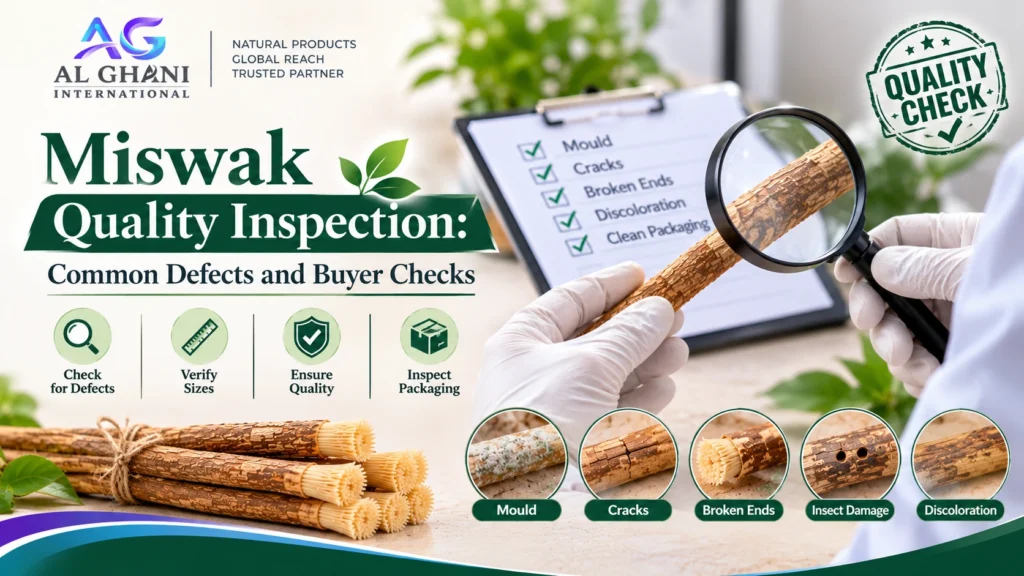
- Checking for visible mould, cracks and insect damage
- Looking for broken or crushed ends
- Checking stick length and thickness
- Inspecting surface cleanliness and unusual discolouration
- Checking individual seals and outer packaging
- Comparing delivered products with the approved sample
These checks help buyers identify common defects and maintain consistent product standards.
Common Miswak Defects to Look For
While choosing the good miswak batch ome defects are easy to notice during a visual inspection. Others may require additional testing to confirm.
- Visible Mould
Visible mould is a warning sign. It may appear as unusual patches or growth on the surface of a stick. Buyers should not accept or use sticks showing visible mould.
Natural colour variation can occur in Miswak, so a difference in shade alone does not confirm mould. When there is uncertainty, the affected stock should be kept separate and assessed before acceptance.
- Cracks and Splits
Small surface variations are common in natural plant material. Deep cracks, splits or damaged sections can affect the stick’s physical condition and make it unsuitable for sale.
Inspect the length of each sample and pay attention to areas where the outer surface has opened or separated.
- Broken or Crushed Ends
Miswak sticks may become damaged during handling, packing or transport. Check whether the ends are intact and whether the sticks have been crushed or broken.
A few damaged sticks in a large shipment may indicate a handling or packaging issue. Buyers should record the number of affected pieces and discuss the findings with the supplier.
- Excessive Brittleness
A stick that breaks too easily may be difficult to handle or prepare for use. However, dryness alone does not prove that a Miswak is defective. Buyers should assess the product against the agreed condition and approved sample rather than relying on appearance alone.
- Insect Damage and Foreign Material
Inspect the surface for holes, unusual marks, insect activity, dirt or other foreign material. These signs may indicate problems during sourcing, handling or storage.
Products showing signs of contamination should be separated for further assessment.
- Unusual Discolouration or Odour
Natural Miswak sticks may vary in colour and smell. However, an unusual or unpleasant odour, especially when accompanied by visible surface changes, deserves attention.
Buyers should compare the product with an approved sample and ask the supplier to investigate any unexplained differences.
Check Miswak Length and Thickness
Dimensions are important when buyers order products according to specific retail or wholesale requirements. A shipment should match the agreed length and thickness range.
For example, Al Ghani International supplies Peelu Miswak in 6-inch and 8-inch sizes, with an approximate diameter of 8–12 mm.
During inspection, buyers should:
- Measure a selection of sticks from different cartons
- Check whether the lengths match the order specifications
- Compare thickness across the selected samples
- Record pieces that fall outside the agreed range
Natural products can have some variation, so buyers should agree on acceptable tolerances before placing an order. This makes inspection more consistent and reduces disagreements after delivery.
Inspect the Packaging and Seals
Packaging protects Miswak sticks during handling, storage and transport. If the order includes individually vacuum-sealed sticks, inspect the seals for openings, tears or visible damage.
Check that:
- Individual packs are properly sealed
- There are no obvious holes or damaged areas
- Outer cartons are clean and in suitable condition
- The packed quantity matches the order
- Product labels and details match the agreed requirements
Vacuum sealing can help limit exposure to the surrounding environment, but it does not sterilise a product or guarantee a particular shelf life. Buyers should still check the condition of the sticks before packing and follow suitable storage practices.
How to Inspect a Bulk Miswak Shipment
For wholesale miswak orders, checking only one or two sticks may not give a clear picture of the entire shipment. Buyers should inspect samples from different cartons and compare them with the approved sample.
A practical inspection process includes:
- Select cartons from different parts of the shipment.
- Open the cartons and examine a representative selection of sticks.
- Check the physical condition, dimensions and packaging.
- Record any damaged, defective or inconsistent products.
- Take photographs of visible issues.
- Contact the supplier if the findings do not match the agreed specifications.
Keeping inspection records can help both parties understand the issue and decide how to address it.
What Visual Inspection Cannot Confirm
Visual inspection is useful for identifying visible defects, but it cannot establish every aspect of product safety or quality.
For example, chemical residues, microbial contamination and certain forms of deterioration may not be visible. These concerns require appropriate testing and assessment.
Research on Miswak has examined its composition and reported effects on oral health. A useful background source is this review of Miswak and its effects on oral health, published in the Saudi Dental Journal. The research discusses Miswak’s properties and oral health findings, but it should not be treated as a product certification or a substitute for quality testing.
Storage practices also deserve attention. A 2025 scoping review of knowledge and practices related to Salvadora persica Miswak reports variation in preparation and storage practices across the studies it examined. Buyers should therefore agree on suitable handling and storage requirements with their suppliers.
How Al Ghani International Handles Miswak Quality
Al Ghani International is a Miswak manufacturer and exporter based in Lahore, Pakistan. Its in-house process includes sourcing and selecting Peelu Miswak, cleaning, sizing, preservation treatment, air drying and quality inspection before export preparation.
The company supplies 6-inch and 8-inch Peelu Miswak sticks with an approximate diameter of 8–12 mm. Individually vacuum-sealed options, private-label services and custom packaging are also available.
For wholesale orders, the minimum order quantity is 5,000 sticks. Buyers can discuss product specifications and packaging requirements before confirming an order.
Frequently Asked Questions
How can I identify a defective Miswak stick?
Look for visible mould, deep cracks, broken ends, insect damage, foreign material and unusual odours. Compare the sticks with the agreed product specifications and approved sample.
Is a difference in Miswak colour a sign of poor quality?
Not necessarily. Miswak is a natural plant product, so some colour variation is expected. Unusual discolouration should be assessed alongside other signs, such as mould, damage or an unpleasant smell.
Does vacuum-sealed packaging guarantee Miswak quality?
No. Vacuum sealing helps limit exposure to the surrounding environment, but it does not prove the product was in good condition before sealing or guarantee its shelf life. The sticks should still be inspected.
What should wholesale buyers check before accepting a shipment?
Buyers should check product condition, dimensions, packaging, quantity and consistency with the approved sample. Any defects or differences should be recorded and reported to the supplier.
What makes a high quality Miswak stick?
A high quality Miswak stick should meet the agreed specifications and be free from visible defects such as mould, serious damage, insect activity and foreign material. Buyers should also check its dimensions, packaging and consistency across the order. The best quality Miswak for a particular order is one that meets the buyer’s stated requirements and has been properly inspected.