Miswak sticks are available in different lengths, thicknesses, botanical sources, and packaging formats. These differences matter when choosing a stick for personal use or sourcing products for retail and wholesale sale.
Some Miswak sticks are thin and easy to carry, while others have a larger diameter. You may also find Peelu Miswak, olive Miswak, and other traditional chewing sticks made from different plants.
This guide explains the main types of Miswak sticks and what to consider when choosing the right product.
Different Types of Miswak by Plant Source
The first difference to understand is the plant from which the chewing stick is made. The botanical source can affect the stick’s appearance, texture, and other characteristics.
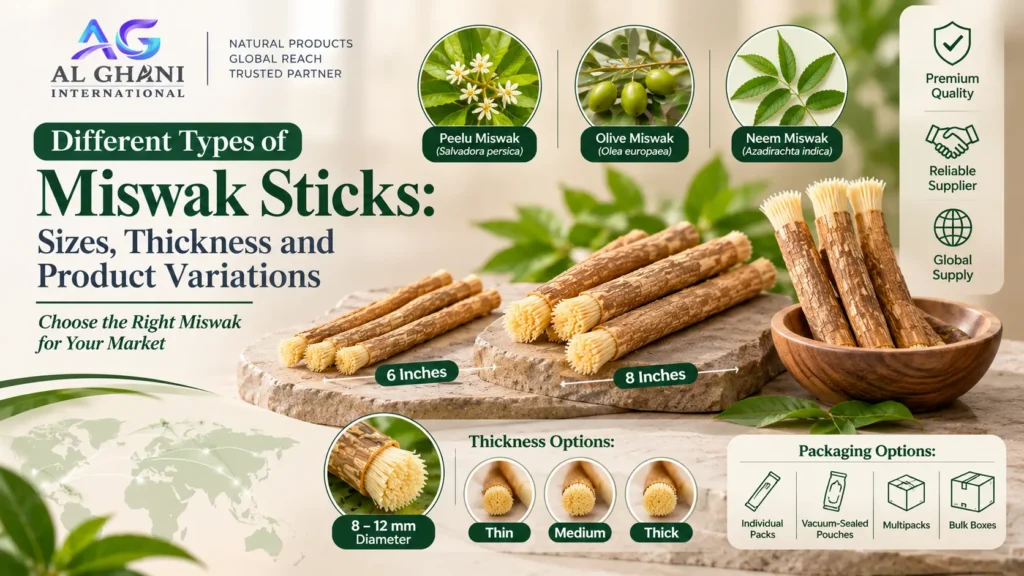
Peelu Miswak (Salvadora persica)
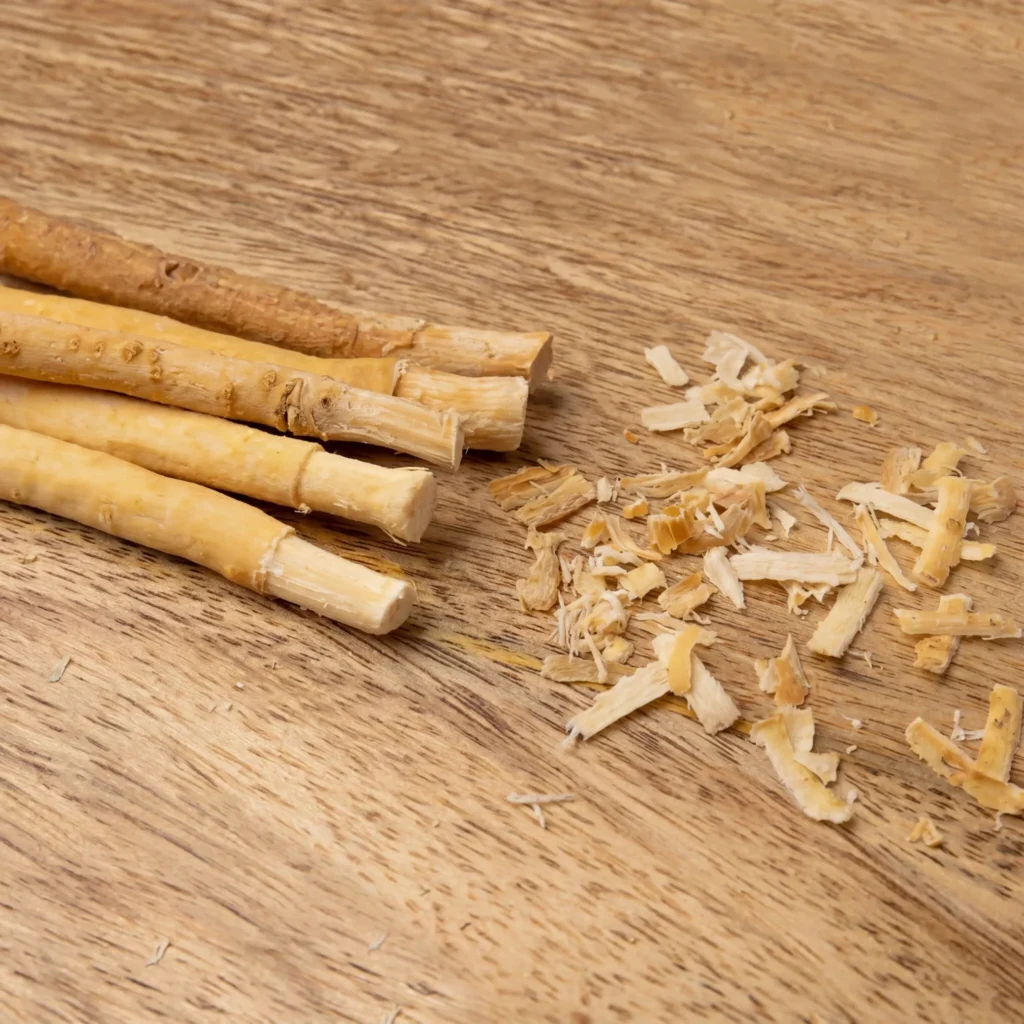
Peelu Miswak comes from the Salvadora persica tree, also known as Arak or the toothbrush tree. It is one of the most widely recognised types of Miswak and is commonly used across the Middle East, Pakistan, and other regions.
The roots and smaller branches of the plant are used to prepare chewing sticks. Peelu Miswak is a popular choice for businesses supplying traditional Miswak products.
According to Kew Science’s profile of Salvadora persica, the plant is commonly known as the toothbrush tree, and its roots and stems are used for oral hygiene.
Olive Miswak (Olea europaea)
Olive Miswak is made from the olive tree. It is another type of traditional chewing stick available in some markets.
It is botanically different from Peelu Miswak, so buyers should not assume that both products have the same texture, appearance, or characteristics.
Neem and Other Chewing Sticks
Neem (Azadirachta indica) and several other plants have also been used to make traditional chewing sticks.
However, not every plant-based chewing stick is botanically Miswak from Salvadora persica. If you are buying for a specific market or brand, always confirm the plant source with your supplier.
A scientific review of Miswak and oral health discusses the use of Salvadora persica and other plant species for traditional tooth-cleaning sticks.
Miswak Stick Sizes: 6-Inch, 8-Inch and Other Lengths
Length is one of the main differences between commercially available Miswak sticks.
6-inch Miswak
A 6-inch stick is a compact option. Its shorter length can make it easier to carry, store, and include in smaller retail packs.
8-inch Miswak
An 8-inch stick provides more length and may suit customers who prefer a longer stick. It can also be a useful option for retailers offering more than one product size.
Traditional chewing-stick measurements vary across published sources. Some research describes sticks around 15–20 cm long, but these measurements are not a universal commercial standard. You can read more in this review of the traditional and modern uses of Salvadora persica.
For wholesale orders, confirm the actual length in inches or centimetres rather than relying only on descriptions such as small or large.
Thin, Medium and Thick Miswak Sticks
Thickness is another important difference between Miswak products. Suppliers may describe sticks as thin, medium, or thick according to their diameter.
- Thin Miswak: Has a smaller diameter and a slimmer shape.
- Medium Miswak: Offers a middle size between thinner and thicker options.
- Thick Miswak: Has a larger diameter and a more substantial feel.
There is no universal measurement that every supplier uses for these categories. One supplier’s medium stick may be close to another supplier’s thick option.
For this reason, wholesale buyers should ask for the diameter in millimetres. This makes product comparisons easier and helps maintain consistency across orders.
Fresh and Dried Miswak Sticks
Miswak is also sold in different preparation and packaging conditions.
Fresh Miswak is supplied in a condition that retains more of its natural moisture. It may be individually vacuum-sealed or packed using another suitable method.
Dried Miswak has undergone more moisture loss before sale. Its texture and handling characteristics may differ from those of a fresher stick.
The choice depends on customer preference, packaging requirements, and how the product will be stored and distributed. Buyers should ask suppliers how the Miswak is prepared and packed rather than assuming that every fresh or dried product has the same condition or shelf life.
Other Miswak Product Variations
Apart from plant source, length, and thickness, Miswak products may differ in their preparation and accessories.
Common variations include:
- Natural Miswak sticks: Supplied in their regular stick form, with the user preparing the tip before use.
- Pre-prepared Miswak: Supplied with one end already opened or formed into brush-like fibres.
- Individually vacuum-sealed Miswak: Each stick is packed separately.
- Flavoured Miswak: Available from some suppliers with added flavours.
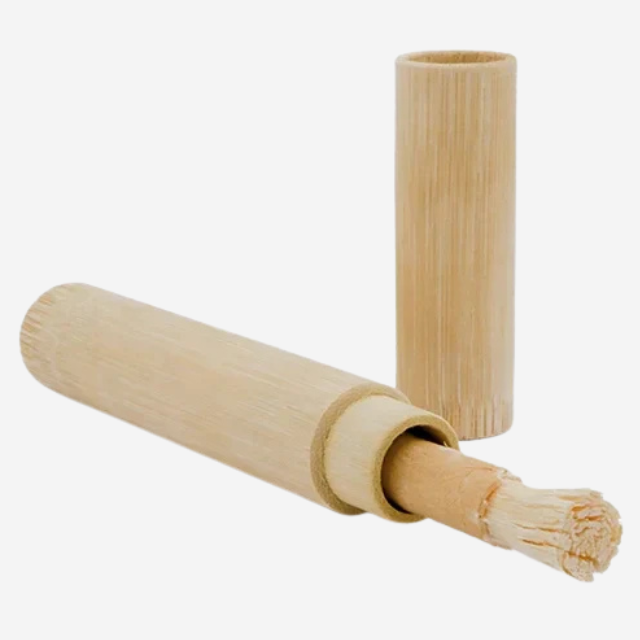
- Miswak with holders: Sold with plastic or wooden holders for storage and carrying.
These are product and presentation variations rather than different botanical types. Check the supplier’s specifications to understand exactly what is included.
How to Choose the Right Miswak for Your Business
If you are buying Miswak for wholesale or retail sale, focus on the specifications your customers are likely to prefer.
Before placing an order, consider:
| What to check | What to confirm |
| Plant source | Peelu (Salvadora persica) or another plant |
| Length | 6 inches, 8 inches, or another specified size |
| Thickness | Actual diameter in millimetres |
| Product condition | Fresh or dried |
| Preparation | Natural stick or pre-prepared tip |
| Packaging | Individual, vacuum-sealed, or bulk |
| Accessories | Plastic or wooden holders, if required |
If you are comparing suppliers, request samples where available. Check the stick length, diameter, appearance, and general condition before confirming a large order.
Miswak Sizes and Wholesale Supply from Al Ghani International
Al Ghani International is a Miswak manufacturer and exporter based in Lahore, Pakistan. The company supplies Peelu Miswak made from Salvadora persica to wholesalers, distributors, retailers, and importers.
Its standard Miswak specifications include:
- Length: 6 inches and 8 inches.
- Approximate diameter: 8 to 12 mm.
- Product source: Salvadora persica roots.
- Packaging: Individual vacuum-sealed options.
- Minimum wholesale order: 5,000 sticks.
Businesses can discuss their required product specifications, packaging preferences, and private-label requirements with the company.
If you are sourcing Miswak for your retail business or distribution network, share your preferred stick size, estimated quantity, and packaging requirements to discuss a suitable wholesale order.
Visit Al Ghani International to make a wholesale enquiry.
Frequently Asked Questions
What are the most common types of Miswak?
Peelu Miswak from Salvadora persica is one of the most widely recognised types. Olive and neem chewing sticks are also available in some markets, although they come from different plant species.
What is the difference between 6-inch and 8-inch Miswak?
The main difference is the length. A 6-inch stick is shorter, while an 8-inch stick provides more length. The preferred size depends on customer requirements and the intended product format.
What is the difference between thin and thick Miswak?
Thin Miswak has a smaller diameter, while thick Miswak has a larger diameter. Since suppliers may use different grading systems, ask for the actual measurements in millimetres.
What Miswak sizes does Al Ghani International supply?
Al Ghani International supplies standard 6-inch and 8-inch Peelu Miswak sticks with an approximate diameter of 8 to 12 mm. The minimum wholesale order starts at 5,000 sticks.