Choosing a reliable miswak wholesale supplier is an important decision for importers, distributors, wholesalers and brands selling natural oral care products. Product quality, packaging, order quantities and export arrangements can affect customer satisfaction, inventory planning and profit margins.
Before placing a bulk order, buyers should evaluate the supplier’s product specifications, quality control process, sample policy, minimum order quantity (MOQ), private-label options and shipping arrangements.
This guide explains what to check before choosing a miswak supplier and how to prepare for a long-term wholesale partnership.
1. Verify the Miswak’s Botanical Origin and Specifications
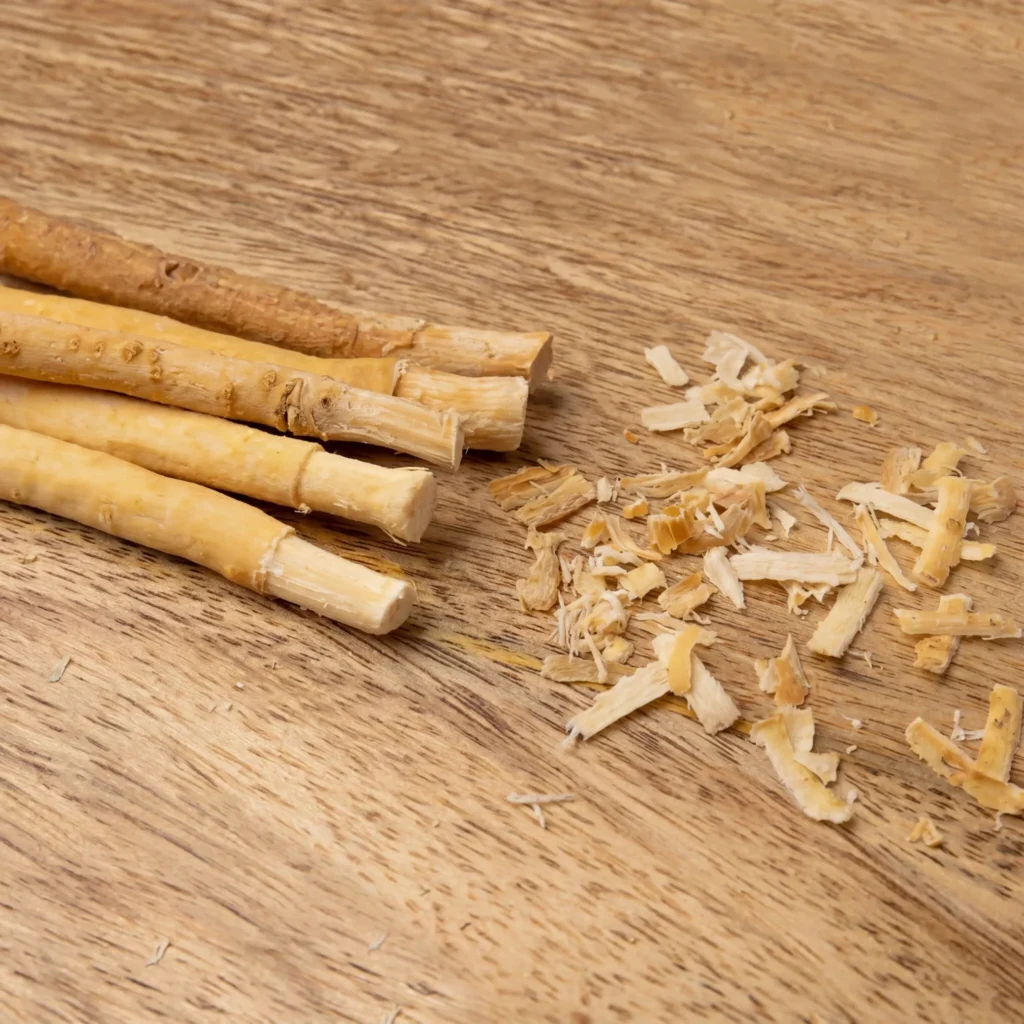
Start by confirming the botanical species used to produce the miswak sticks. Traditional Peelu Miswak comes from Salvadora persica, also known as Arak. Buyers should ask suppliers to confirm the plant species rather than relying on product names or marketing descriptions alone.
Product specifications matter just as much as botanical origin. Two suppliers may both offer Salvadora persica Miswak while supplying sticks that differ in size, thickness, freshness and preparation.
Before requesting a quotation, confirm:
- Botanical species: Verify that the product is Salvadora persica if that is what your business requires.
- Length: Specify the required stick length, such as 6 inches or 8 inches.
- Diameter: Agree on an acceptable thickness range for your product line.
- Preparation: Ask how the sticks are selected, cleaned, cut and prepared for packing.
- Product condition: Establish how freshness and acceptable moisture condition will be assessed.
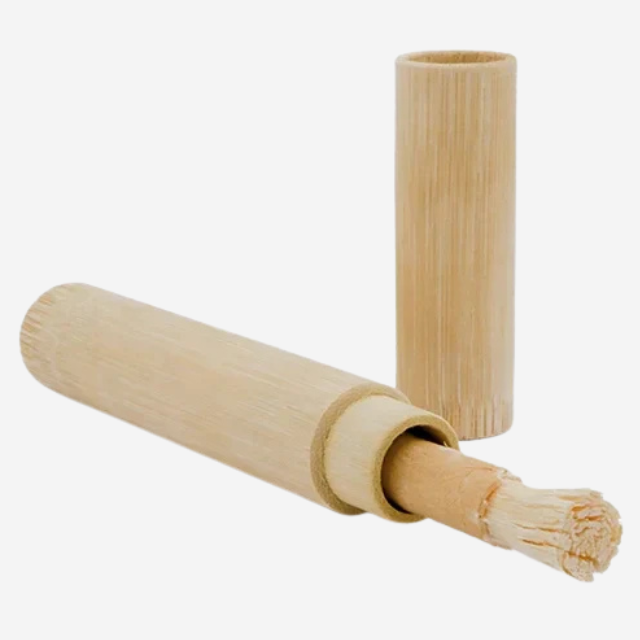
- Accessories: Confirm whether you need Miswak sticks alone or sticks supplied with holders.
Written specifications help prevent misunderstandings between the buyer and supplier. They also provide a reference point when checking future shipments.
2. Assess Product Quality and Batch Consistency
A supplier may provide a good initial sample but struggle to maintain the same quality across larger orders. For wholesalers and distributors, consistency is essential because customers expect the product they receive next month to resemble the product they purchased previously.
Ask the supplier how it checks incoming raw materials and finished Miswak sticks. A well-defined process should cover product selection, cleaning, sizing, visual inspection and packaging.
When evaluating samples, examine:
- Appearance: Check for unusual discoloration, visible contamination, mould or signs of damage.
- Size and thickness: Compare the sticks with the agreed specifications.
- Condition: Check for excessive dryness, brittleness or other signs of poor storage.
- Preparation: Look for consistent cutting, cleaning and presentation.
- Packaging condition: Inspect seals and packaging for damage or leakage.
Ask whether the supplier performs documented quality checks and whether inspection records or relevant test reports are available. If microbiological testing, heavy-metal analysis or other safety testing is important for your target market, request the relevant documentation instead of assuming it has been performed.
A useful question is: How do you ensure that bulk orders maintain the same specifications and quality as the approved sample?
The answer should explain the supplier’s actual process rather than rely on general promises of premium quality.
3. Check Packaging and Private-Label Capabilities
Packaging affects product presentation, protection during transport, retail suitability and brand identity. The right format depends on whether you sell through physical shops, online marketplaces, Islamic stores, health retailers or your own distribution network.
Common requirements include:
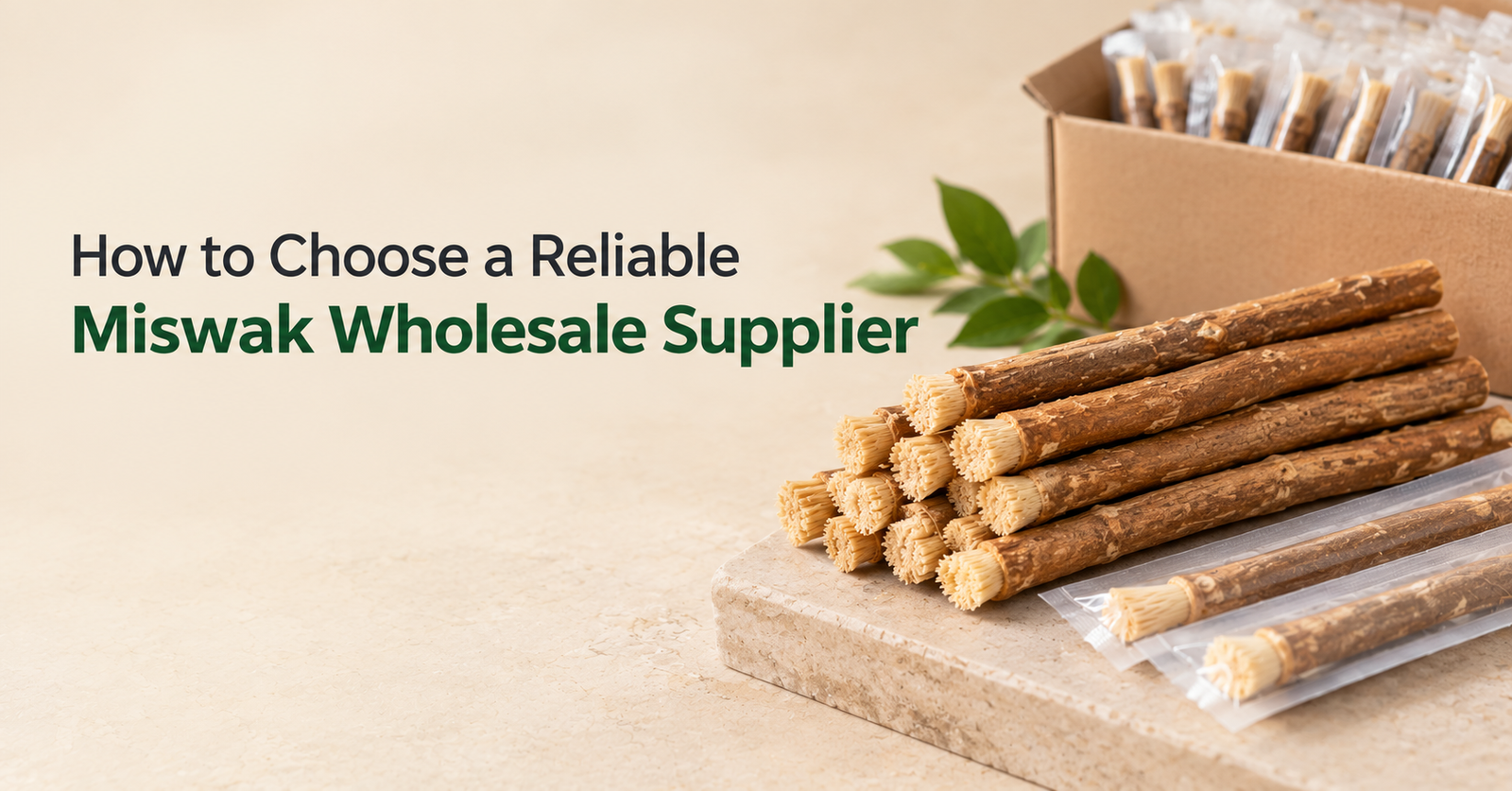
- Individually sealed Miswak sticks
- Retail-ready packs and boxes
- Bulk packs for wholesalers
- Master cartons for export shipments
- Custom-printed packaging
- Private-label products carrying the buyer’s brand
For individually vacuum-sealed Miswak, inspect the seal, packaging material and condition of the product when the package is opened. Vacuum sealing can help protect the product during storage and transport, but it does not automatically establish sterility or guarantee a particular shelf life.
If you are launching a private-label Miswak brand, confirm which parts of the packaging can be customised. Ask about artwork requirements, printing options, packaging quantities, sample approval and any additional costs.
Al Ghani International offers wholesale Miswak supply, private-label manufacturing and custom packaging options. Its product range includes Peelu Miswak sticks and Miswak holders in plastic and wooden options. Buyers should confirm the required configuration, packaging format and specifications before placing an order.
4. Request Samples Before Ordering in Bulk
Samples allow buyers to inspect the actual product before committing to a commercial quantity. This is especially useful for importers introducing Miswak to a new market or retailers developing their own product range.
When requesting samples, provide the supplier with your intended specifications. If you plan to sell individually vacuum-sealed 6-inch Miswak sticks, for example, request a sample in that format rather than evaluating a different size or packaging type.
Use a simple evaluation checklist:
- Compare the sample with the agreed length and diameter.
- Inspect the stick’s appearance, condition and preparation.
- Examine the packaging and seal.
- Check the product’s condition after opening.
- Review the labels and product information intended for your market.
- Confirm whether the bulk order will follow the same specifications.
For private-label orders, request a packaging proof or pre-production sample where appropriate.
Al Ghani International offers samples, including shipping, to prospective buyers. Confirm the sample arrangement and the specifications available for your intended order directly with the company.
5. Understand Minimum Order Quantities and Wholesale Pricing
The minimum order quantity determines the smallest order a supplier will accept. It can affect your initial investment, storage requirements and ability to test demand before committing to larger volumes.
A low MOQ may suit a small retailer, while an importer or established distributor may need larger quantities to maintain stock and reduce the cost per unit.
Before comparing quotations, confirm:
- Minimum order quantity per product
- Whether the MOQ changes for custom packaging or private labelling
- Price per stick or retail pack
- Packaging and printing charges
- Sample costs, if applicable
- Payment terms and deposit requirements
- Shipping, insurance and other applicable charges
Al Ghani International’s stated MOQ is 5,000 Miswak sticks, including orders involving different packaging or private-label requirements. Buyers should confirm the final product configuration, quotation and any applicable terms before ordering.
Do not compare suppliers using the unit price alone. Calculate the estimated landed cost, which is the total cost of getting the goods to the intended destination. Depending on the agreement, this may include product costs, packaging, freight, insurance, customs duties, taxes and clearance charges.
A slightly lower unit price may not produce a lower overall cost if shipping, packaging or import expenses are higher.
6. Confirm Export Documentation and Destination-Market Requirements
International Miswak shipments may be subject to customs procedures and requirements relating to plant-based products. These can vary by destination, product classification, packaging and shipment method.
Before placing an order, identify the documentation required by your importing country. Depending on the shipment and applicable rules, buyers may need commercial invoices, packing lists, certificates of origin, customs information or phytosanitary documentation.
Do not assume that every document is required for every shipment, or that a supplier holds a particular certification simply because it exports internationally.
Ask the supplier:
- Which export documents can you provide?
- Can you support the documentation required for my destination?
- Are any additional inspections or certificates needed?
- Can you provide existing quality reports or relevant compliance records?
- Who will arrange customs clearance and manage import requirements?
The importer should independently verify destination-country requirements with the relevant authorities or customs broker.
Al Ghani International is a Pakistan-based Miswak manufacturer and exporter. Buyers can discuss their destination, intended product and shipping requirements with the company to determine which documents and arrangements apply to their order.
7. Check Lead Times, Shipping and Repeat-Order Planning
A supplier’s ability to meet your purchasing schedule is important when you sell through retailers, distributors or online marketplaces. Delays can lead to stock shortages, missed sales and problems maintaining customer commitments.
Before confirming an order, ask about:
- Production or preparation time
- Packaging and private-label production time
- Sample approval requirements
- Estimated dispatch date
- Available shipping methods
- Shipment tracking and communication
- How changes to an order may affect the schedule
Air freight may suit smaller or more time-sensitive shipments, while sea freight may be more suitable for larger orders, depending on cost, destination and transit time.
Ask for estimated lead times in writing and confirm when the delivery schedule begins. For example, custom packaging may require artwork approval before production can proceed.
If you expect to reorder regularly, discuss forecast quantities and likely ordering intervals. A supplier who understands your purchasing schedule can help you plan stock levels more effectively.
8. Evaluate Communication and Supplier Reliability
Reliable communication helps prevent errors before, during and after an order. A supplier should be able to explain its specifications, pricing, packaging options and commercial terms clearly.
Look for practical signs of reliability:
- Quotations that clearly describe the product and quantity
- Written confirmation of specifications and packaging
- Clear payment and shipping terms
- Realistic production and dispatch estimates
- Prompt answers to technical and commercial questions
- A clear process for reporting damaged or non-conforming goods
You can also request relevant business documentation, references or evidence of manufacturing capabilities where appropriate.
Be cautious of suppliers who avoid basic questions, change agreed specifications without approval, make unsupported certification claims or refuse to document important order terms.
For repeat business, agree in advance how quality concerns, replacement requests and specification changes will be handled. Clear expectations reduce the chance of disputes after a shipment arrives.
Why Consider Al Ghani International for Wholesale Miswak?
Al Ghani International is a Pakistan-based manufacturer and exporter of Peelu Miswak, sourced from Salvadora persica. Established in Lahore in 2012, the company supplies Miswak products to international business buyers.
Its capabilities include:
- Product options: 6-inch and 8-inch Miswak sticks, with a stated diameter range of 8–12 mm.
- Individual packaging: Vacuum-sealed sticks for wholesale and retail supply.
- Private-label services: Custom branding and packaging for businesses developing their own Miswak products.
- Related products: Plastic and wooden Miswak holders.
- Wholesale quantities: A stated minimum order quantity of 5,000 sticks.
- Sample arrangements: Samples, including shipping, are available for prospective buyers.
- Export support: Buyers can discuss shipping arrangements and relevant export documentation for their destination.
These details provide a starting point for evaluating whether the company’s products and order terms suit your business. Confirm the final specifications, packaging, documentation, pricing and delivery arrangements directly before placing an order.
Explore wholesale and bulk miswak orders or contact Al Ghani International to discuss your purchasing requirements.
Frequently Asked Questions
What should I look for in a Miswak wholesale supplier?
Check the botanical species, product specifications, quality-control process, packaging options, sample policy, MOQ, pricing, export documentation and delivery terms. Request a sample and written quotation before placing a bulk order.
What is the minimum order quantity for wholesale Miswak?
MOQs vary by supplier and product configuration. Al Ghani International’s stated minimum is 5,000 Miswak sticks. Buyers should confirm the quotation and order terms for their required packaging and specifications.
Can I buy private-label Miswak sticks?
Some manufacturers offer private-label Miswak with custom branding and packaging. Before ordering, confirm the available packaging formats, printing costs, artwork approval process and minimum quantity.
How can I check Miswak quality before placing a bulk order?
Request a representative sample and compare its length, thickness, appearance, preparation and packaging with the agreed specifications. Ask about the supplier’s quality checks and request relevant test reports where necessary.
What documents are needed to import Miswak?
Requirements depend on the destination country, product classification and shipment. Commercial invoices and packing lists are commonly involved in international trade, while plant-product shipments may require additional documentation. Confirm the applicable requirements with the destination country’s authorities or a customs broker.
How do I compare Miswak wholesale prices?
Compare the same product specifications, order quantity, packaging format and delivery terms. Include freight, insurance, customs duties, taxes and other applicable charges when estimating the landed cost.
How can I choose a supplier for long-term Miswak distribution?
Look for consistent product specifications, documented order terms, suitable production capacity, clear communication and a process for addressing quality issues. Discuss expected order volumes and repeat-order schedules before entering a long-term arrangement.